

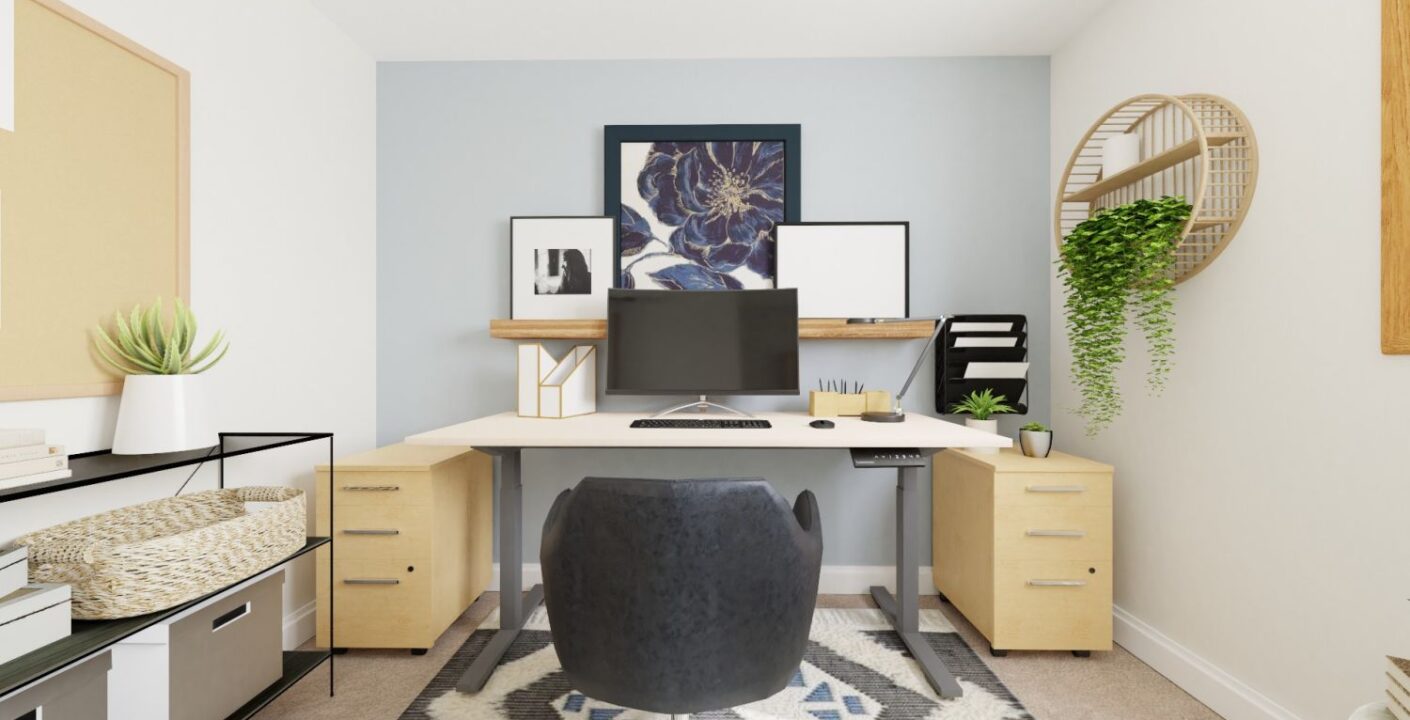
In today’s flexible work culture, the line between home and office has blurred—but that doesn’t mean your productivity has to. Whether you’re working remotely full-time or balancing a hybrid schedule, having a functional home office space is no longer a luxury—it’s a necessity. The right setup can boost focus, support your well-being, and make work feel a little less like… well, work.
1. Choose the Right Location
A home office doesn’t need to be an entire room, but it does need boundaries. Pick a spot with natural light if possible—sunlight can lift your mood and keep your circadian rhythm in check.
If space is tight, even a dedicated corner with a small desk can work wonders as long as it’s clearly defined as your “work zone.”
2. Invest in Ergonomics
A functional home office should support your body as much as your workflow. That means:
- A chair with proper lumbar support
- A desk at the right height (your elbows should form a 90-degree angle when typing)
- A monitor positioned at eye level to prevent neck strain
Small ergonomic upgrades—like a laptop stand, an external keyboard, or a footrest—can transform long hours into something far more comfortable.
3. Prioritize Organization
Clutter is the enemy of clarity. Use shelves, drawers, or desk organizers to keep things tidy. A minimalist setup not only looks cleaner but also reduces distractions.
Digital clutter counts too—take time to streamline your desktop and email inbox for a calmer start to each day.
4. Light It Right
Lighting sets the tone of your workspace. Pair natural light with a good desk lamp to reduce eye strain.
- Warm lighting can make the space feel cozy and inviting.
- Cool lighting helps boost alertness and focus.
Choose your lighting based on your working style and needs—it makes a bigger difference than you think.
5. Add a Personal Touch
Your home office should still feel like you. Add small personal elements that inspire or ground you:
- A plant to add life and purify the air
- A framed photo or art print that brings joy
- A motivational quote to keep you focused
Just don’t overdecorate—keep it balanced and functional.
6. Minimize Distractions
Noise is one of the biggest productivity killers. If silence isn’t an option, try noise-canceling headphones or ambient background sounds to stay in the zone.
For shared households, establish clear boundaries—a “do not disturb” sign or agreed working hours can make a huge difference.
7. Make It Flexible
A functional home office should adapt to your needs.
- Consider a standing desk or convertible setup to switch positions throughout the day.
- If your office doubles as a hobby or relaxation area, use modular furniture and smart storage to transition smoothly between roles.
Flexibility keeps your workspace efficient and your body happier.
Final Thought
Creating a home office space isn’t about making it picture-perfect—it’s about making it work for you.
With the right mix of ergonomics, organization, and personal touches, you can build an environment that not only supports your career but also elevates your day-to-day well-being.